

Ryan Kellman
/
NPR
The Confederated Salish and Kootenai Tribes are moving forward with their climate plan despite the loss of state support and federal funding.
-
 Megan Johnson/Montana Public RadioPublic libraries have books, magazines, movies and … fresh air? Missoula Public Library and its satellite campuses have been set up as spaces where people can gather during hot, smoky days and breathe clean air.
 -
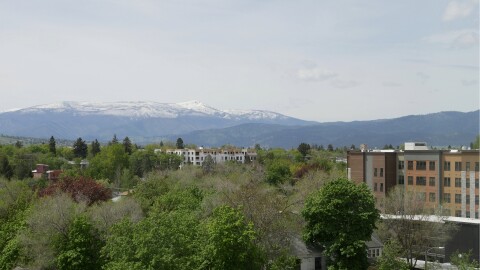 Josh BurnhamTreeless city streets aren’t just an eyesore, they’re also ovens that trap heat during the day. That’s a problem that’s worsening as the climate changes. A Missoula nonprofit is tackling the problem one sapling at a time.
 -
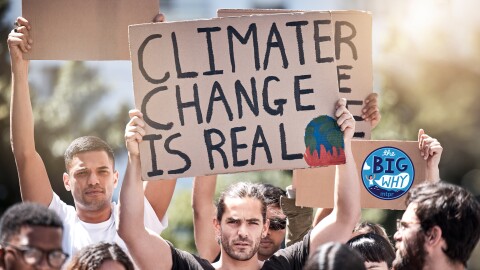 istockFollowing a lot of news about climate change, protests, presidential directives and court cases, a listener wants to know what Montana is doing to address climate change. It's a big question, so the answer will come in three parts. Here's part 1.
 -
 Ellis JuhlinTwo billion pounds of pumpkins are grown in the United States every fall. As gourds are swapped out for garlands, many pumpkins end up in landfill, where their decomposition drives up planet warming emissions. Montana Public Radio’s Ellis Juhlin reports on a solution to keep pumpkins out of landfills.


U.S. Drought Monitor
Snowpack in the West typically reaches its peak in early April but that hasn’t happened this year. Drought persists, setting up conditions for wildfires and low water supply. This warm, snowless winter points to a warming climate and trouble for Montana farmers.
-
 Ellis JuhlinFrom the slopes of Whitefish, researchers are using ski resorts to gather valuable data – and seeds, that could help restore forests. In some regions of Montana, over 90 percent of whitebark pines have died.
 -
 U.S. Environmental Protection Agency/www.epa.govTemperatures can vary widely across a city, even in the same neighborhood. As the climate heats up, volunteers in Missoula are mapping hot spots in their community.
 -
 gorodenkoff/Getty Images/iStockphoto/iStockphotoMontana's largest utility this year struck deals to power three data centers — and counting. NorthWestern Energy has promised them at least twice the amount of electricity used to power all homes and businesses in the state. As data centers look to break ground in Montana, some worry ratepayers will have to subsidize their colossal power needs.
 -
 iStockWeather patterns like extreme temperatures, and rainfall, can have dire consequences for farming and ranching. A new report details how this will affect Montana's agriculture economy.


Bo Crees
/
Montana Audubon
As the song says, “don’t go chasing waterfalls” — unless you’re a research team looking for an elusive bird that only nests in the “splash zone.” MTPR’s Ellis Juhlin recently joined one such group on a scouting trip.


Fireline probes the causes and consequences of the increasingly devastating wildfires burning in the U.S. It taps into the experience of firefighters, tribal land managers, climate scientists and others to understand how we got here and where we're going.
-
 Have you had any unexpected bird sightings this winter? Maybe you saw birds in unexpected places or times. Or maybe birds you expected never showed up. You're not alone. Bird researchers – and an observant listener – have noticed, too. That listener wants to know: What do we know about how climate change is impacting birds, both in and out of Montana?
 -
 In the last episode of Grounding season two, Host Sarah Aronson and MTPR Host and Producer Lauren Korn talk about the homesickness they feel for places they love that have changed. And, they put a word to that feeling—solastalgia. Lauren interviews writer and editor Paul Bogard, who created an anthology sourced from people coming to terms with the word and the feeling of solastalgia.
 -
 Grounding episode five takes a stab at an age-old question: what is a human’s place within nature? Host Sarah Aronson speaks to two environmental philosophers—Soazig Le Bihan and Christopher J. Preston—about that divide, and tugs at the dissonance that exists when we’re trying to understand our place in the world relative to other creatures. Are we supposed to go forth and conquer, or should we be ashamed of the impact we’ve had on different species?
 -
 In episode four of Grounding, Sarah Aronson talks to a pharmacist, Dr. Hayley Blackburn, who shares some environmental facts about the industry—one being that pharmaceuticals have been found in water bodies on every single continent. Aronson talks to Blackburn about Prozac fish and drug waste and how Blackburn navigates her moral injury working in an industry that doesn't always align with her values.


